
Introduction
Search engines have become one of the most important ways people discover businesses, products, services, and information. When potential customers search for something related to a business, appearing prominently in search results can create valuable opportunities for traffic, engagement, and conversions.
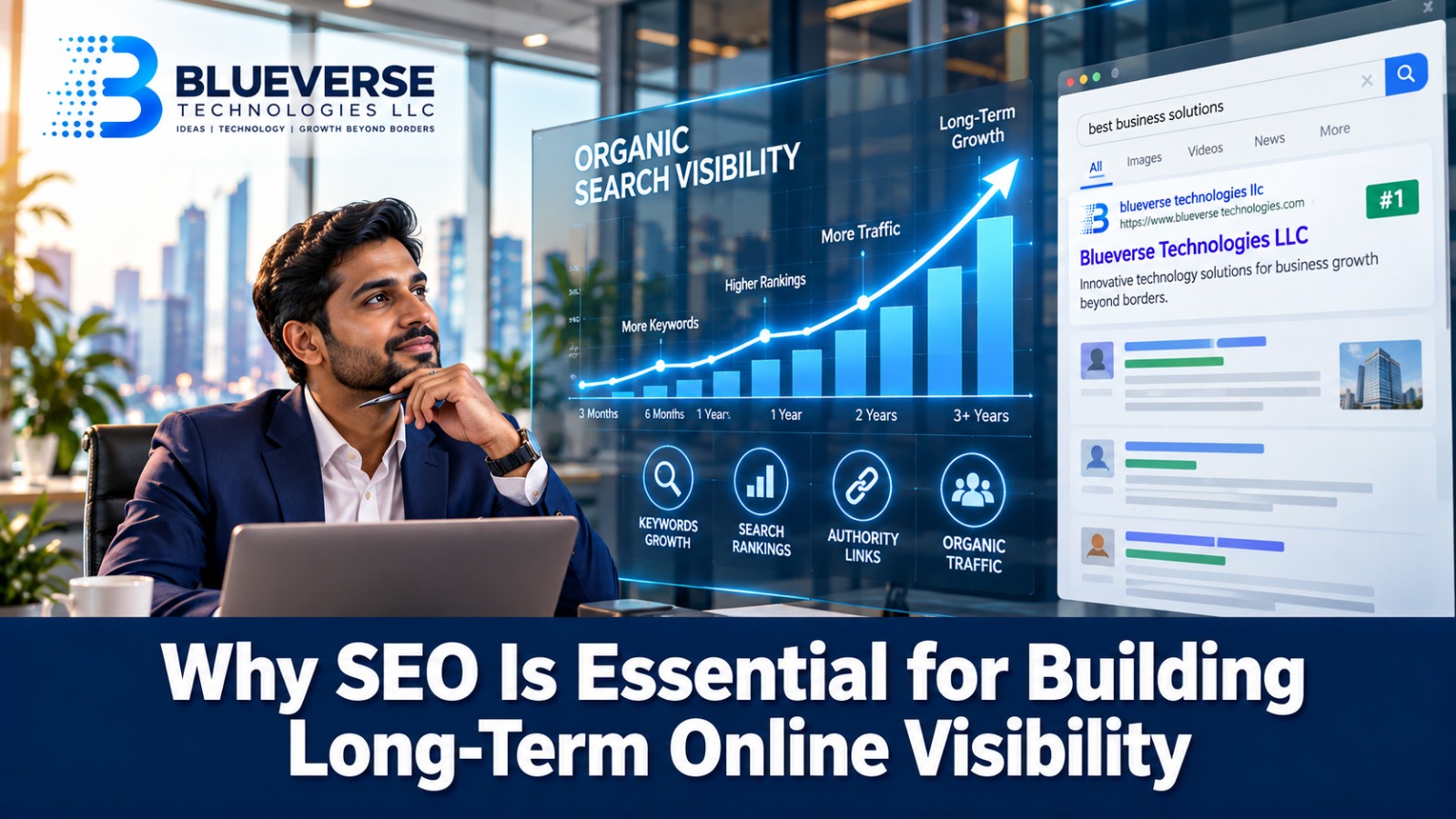
Search engine optimization, commonly known as SEO, helps businesses improve their visibility in organic search results. Unlike short-term promotional tactics, SEO focuses on building sustainable online visibility through website optimization, valuable content, technical improvements, and authority building.
For businesses competing for attention online, investing in professional SEO can create a strong foundation for long-term digital growth.
What Is SEO?
SEO is the process of improving a website so that search engines can better understand, evaluate, and rank its pages for relevant searches.
It involves several areas, including keyword research, technical SEO, on-page optimization, content development, internal linking, website performance, and authority building.
The goal is not simply to attract more visitors. Effective SEO focuses on attracting the right visitors—people who are genuinely interested in the products or services a business offers.
Understanding Search Intent
One of the most important aspects of modern SEO is understanding search intent.
People use search engines for different reasons. Some may be looking for general information, while others may be comparing products, researching services, or preparing to make a purchase.
Businesses need to create content that matches these different intentions. Informational searches may require educational blog posts or guides, while commercial searches may require service pages, comparisons, case studies, or detailed product information.
Matching content to search intent improves relevance and creates a better experience for users.
The Importance of Keyword Research
Keyword research helps businesses understand what their potential customers are searching for online.
Rather than selecting keywords based solely on search volume, effective SEO strategies consider relevance, competition, intent, and business value.
A professional SEO strategy may target a combination of broad keywords, specific long-tail phrases, service-related terms, and informational searches.
These keywords can then be incorporated naturally into website pages and content without compromising readability.
Creating High-Quality Content
Content is a major part of SEO. Search engines aim to provide users with useful and relevant information, so businesses need to create content that genuinely answers customer questions.
High-quality content can include blogs, guides, FAQs, service pages, case studies, videos, and educational resources.
Instead of creating content simply to include keywords, businesses should focus on solving problems and providing valuable insights.
Useful content can also increase credibility. When a website consistently provides helpful information, visitors may begin to view the business as a knowledgeable and trustworthy source.
Technical SEO and Website Performance
A website must also provide a strong technical foundation.
Technical SEO involves areas such as page speed, mobile responsiveness, website architecture, indexing, broken links, structured data, and crawlability.
A slow or poorly structured website can create a frustrating experience for visitors. Improving technical performance can help search engines access and understand website content while also improving usability.
Mobile optimization is particularly important because many users access websites through smartphones and tablets.
Building Website Authority
Search visibility is also influenced by a website’s authority and credibility.
Businesses can strengthen authority by earning relevant backlinks, publishing valuable resources, receiving mentions from reputable websites, and developing content that others find useful enough to reference.
However, quality is more important than quantity. A small number of relevant, trustworthy links can be more valuable than large numbers of low-quality links.
Measuring SEO Success
SEO should be measured using meaningful performance indicators. These may include organic traffic, keyword visibility, engagement, leads, conversions, and revenue generated from organic search.
Regular analysis helps businesses identify opportunities and weaknesses. Pages that perform well can be expanded, while underperforming pages can be improved or updated.
SEO is an ongoing process rather than a one-time activity. Search behavior, competition, website technology, and search engine algorithms continue to evolve.
Why Work With an SEO Agency?
Professional SEO requires technical knowledge, strategic planning, content expertise, analytics, and consistent optimization.
An experienced digital marketing agency can conduct website audits, research keywords, develop content strategies, optimize pages, monitor rankings, and evaluate performance.
This allows business owners to focus on their core operations while specialists manage the complexities of search optimization.
Conclusion
SEO is essential for businesses that want to establish sustainable online visibility. By understanding search intent, creating valuable content, improving technical performance, and building website authority, businesses can attract more relevant visitors and create long-term opportunities.